
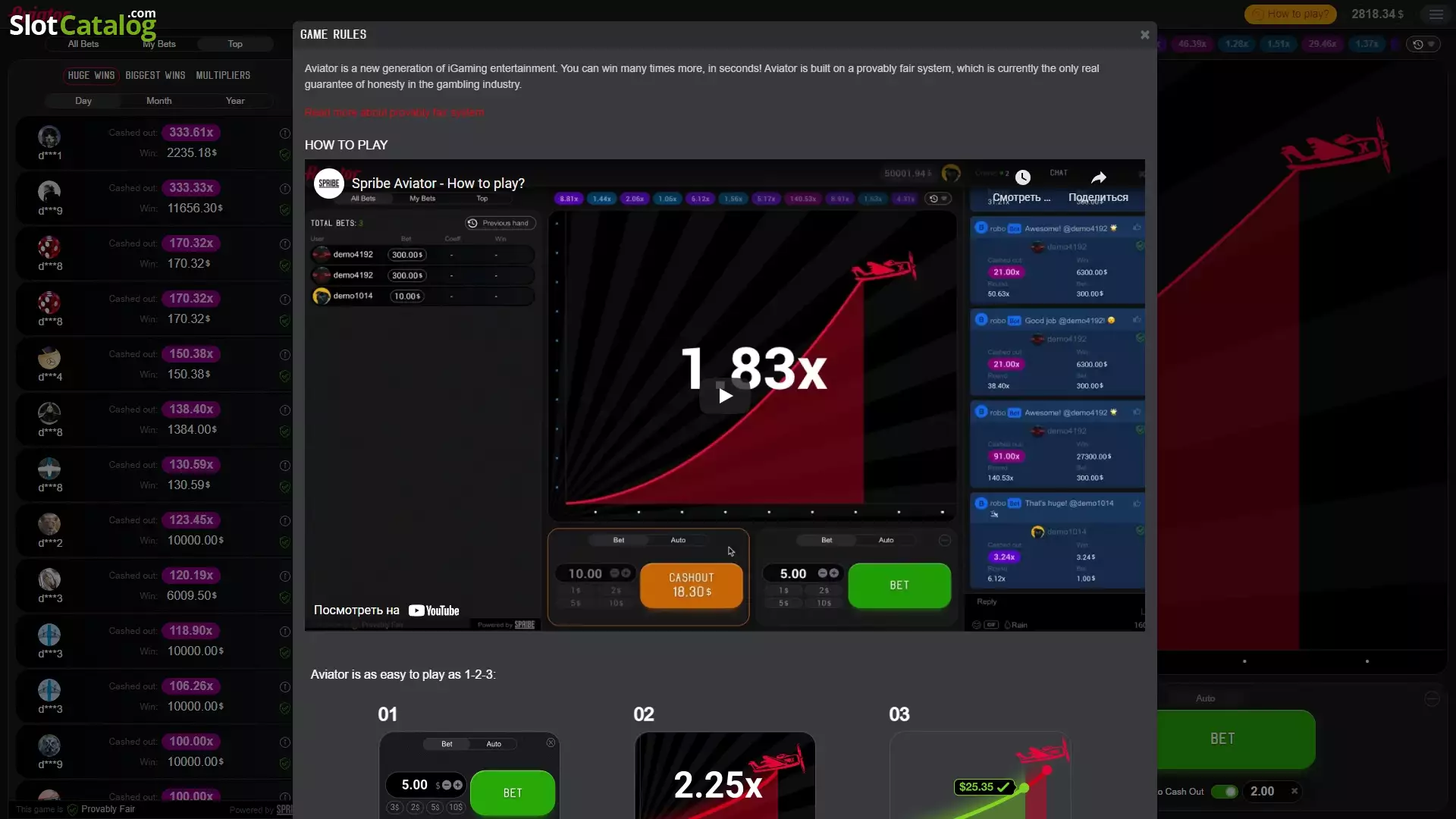
We regard this page as a practical review of Aviator record-win compilations for readers in Spain, not as a promise that those multipliers are repeatable. The title uses “slot” because many players hunt for Aviator that way, but Aviator is a crash game from Spribe, not a reel-based slot. In the compilations we see very high cash-out multipliers, large balance screenshots and dramatic near-misses, and our job is to differentiate the game’s real mechanics from the highlight-reel effect. We will explain how rounds work, what RTP and volatility mean here, how bet controls and auto cash-out function, and what Spanish players should check before treating any record win as a target.
The real nature of Aviator Actually Is and the Reason the Slot Label Can Be Misleading

Aviator is a multiplayer crash game focused on a rising multiplier, not a slot with reels, rows, paylines or ways-to-win. We place a bet before the round starts, watch the aircraft climb, and select when to cash out; the payout is our stake multiplied by the cash-out figure. If the plane flies away before we cash out, that stake is lost. Spribe’s version is famous for a simple aviation theme, a live bet feed, round history and provably fair mechanics. There are no wilds, scatters or free spins in the slot sense, so any article that describes Aviator as a five-reel game is already misleading us about how the result is produced.
Record-win compilations usually present the cash-out multiplier rather than the full round history, which is why they seem more dramatic than normal play. In en línea Aviator España, a player can cash out at 1.50x, 10x or 100x, but the multiplier keeps rising only until the crash point. The game’s own controls include two bet panels, auto cash-out and a live list of other players’ bets; those are game features, not casino-wide bonuses. We should read the label “slot” as a search habit, not a technical description. Once we understand that Aviator is a crash game, the record screenshots make more sense: they are selected moments from a high-variance game, not proof of a repeatable pattern.
How We Would Experience Aviator Practically
Our hands-on routine starts with a licensed Spanish-facing site and the game’s info panel. We fix a small stake that fits our session budget, select an auto cash-out level we can live with, and settle whether we will use one bet panel or two. We put the bet before the round begins, observe the multiplier, and let the auto cash-out run unless we have a solid reason to cash out earlier. After the session, we examine the results without modifying the rules mid-way. This routine will not produce record wins, but it holds our decisions consistent and makes the game’s high volatility simpler to handle.

Record-win compilations are most useful when we view them as evidence of variance, not as a roadmap. They reveal that Aviator can deliver very high cash-out multipliers, but they also mask the many rounds that ended before those levels. We prefer to judge the game by its published RTP, its high-volatility profile, its simple cash-out decision and the controls that help us to stay measured. For Spanish readers, the main takeaway is to verify the rules, set stakes and auto cash-out levels deliberately, and keep record screenshots in context. The title promises a compilation; our review transforms it into a fuller picture of what the game can and cannot do.
Reading Record Collections Without Deceiving Yourself
When we observe a record-win compilation, we should question what has been omitted. The clip may show a 500x cash-out but not the fifty rounds before it, and it may present a large multiplier on a very small stake that produced a modest cash amount. We examine the stake, the cash-out multiplier, the actual payout and whether the round was played in a demo or real-money mode. A high multiplier is not automatically a record win in euros. We also confirm whether the footage is altered, whether the balance is verifiable and whether the site presented is licensed for Spanish players. Those details are important more than the dramatic music and slow-motion crash.
We consider “guaranteed strategy” claims as a red flag. No cash-out pattern, timing trick or prediction tool can modify Aviator’s RTP or force a specific crash point; the game is built to be random and provably fair. Compilations can still show us something useful if we view them as case studies: they illustrate how quickly multipliers can rise, how often high targets miss, and why auto cash-out counts. We use them to understand the game’s variance, not to imitate a stake size or chase a multiplier. If a video urges us to deposit quickly or promises a secret method, we close it and check the official game rules instead.
We also differentiate between the crash point and the cash-out point when a screenshot is shown. A round may have reached 1,000x, but the player in the image may have cashed out much earlier; the headline multiplier is not necessarily the amount that was secured. We examine the payout figure, the stake and the currency, because a 200x cash-out on a €0.10 stake is very different from the same multiplier on a €10 stake. This is especially crucial in Spain, where we compare results in euros and need to factor in any operator-specific limits. A compilation that leaves out these details is entertainment, not proof.
What Spanish Players Ought to Check Before Chasing Big Multipliers
For gamblers in Spain, the first thing to verify is whether the site hosting Aviator is licensed for the Spanish market and whether the game rules are visible before we bet. We check the stake limits, the maximum payout cap, the RTP display and any operator-specific terms that influence withdrawals. We also ensure that we are 18 or over and that we comprehend the responsible-gambling tools on offer, such as deposit limits, session reminders and self-exclusion. Aviator is a game, not a casino, so we do not assess it by site-wide bonus offers or payment methods. We evaluate it by the round mechanics, the published rules and whether the operator shows the game transparently.
We also keep apart entertainment budget from money we need for other things, and we plan in advance how many rounds or how much time we will spend. The fast pace of Aviator makes it simple to place another bet after a loss, so we set a stop-loss and a stop-win point before the first round. If a compilation makes a 100x target look normal, we tell ourselves that most rounds will not reach it. We can use demo mode where available to learn the controls without risking money. The aim is to savor the game’s mechanics and accept the variance, not to copy someone else’s highlighted result.
How a Round Works from Initial Wager to Payout
We begin a round by selecting a stake and placing a bet before the aircraft takes off. When the round starts, the multiplier rises from 1.00x, and our single option is when to click cash out or whether an auto cash-out setting will take care of it. If we withdraw at 3.20x on a €1 stake, the gain is €3.20 prior to any operator-specific fees; if the plane falls first, that €1 stake is gone. The round history displays previous crash points, but it does not forecast the next one. We consider each round as independent and refrain from reading patterns into a sequence of low or high multipliers.
The timing pressure is the heart of the game, and it is also why record wins seem so remarkable. A multiplier can crash at 1.00x almost immediately, or it can run far beyond the levels most players usually cash out at. There is no payline to examine and no bonus round to start; we are navigating a single decision under uncertainty. Auto cash-out allows us to pre-commit to a target, such as 1.80x or 5.00x, instead of letting emotion determine. We still have to accept that a high target will lose more often than a low one. The record compilations hardly ever reveal the long run of rounds where the same target did not achieve.
Bet Range, Max Win and Useful Controls in Spain
The stake range we find in Aviator hinges on the operator and the currency, so we avoid quoting a single universal minimum or maximum. In Spain, stakes are normally shown in euros, and the game screen must display the allowed limits before we verify a bet. Many versions offer a low minimum for casual rounds and a maximum that can be much higher, but the exact cap is a rule we must check in the game panel. The same holds to the maximum win or payout cap: some versions promote a cap, and operator rules can impose further limits. We don’t assume that a record multiplier is fully payable without checking those terms first.
The practical controls are more helpful than any “trick” we notice in compilation videos. Aviator offers us two bet panels, so we can set one bet and ready a second for the next round; we ought to use that flexibility carefully rather than doubling stakes emotionally. Auto cash-out enables us set a multiplier in advance, and the live bet feed shows what other players are doing without telling us what will happen next. We also use a session budget and a time limit before opening the game, because the fast round cycle can make repeated bets appear smaller than they are. These controls reinforce discipline; they do not change the underlying odds.
Return to Player, Volatility and the Calculations Behind All-Time Multipliers
Aviator is commonly listed with an RTP of around 97%, which means the long-run average payout is elevated for a crash game but still below 100%. The residual edge supports the game and is not a fee we can bypass by using a different cash-out style. Volatility is elevated because most rounds end at modest multipliers while a small number run much higher; that shape produces the spectacular screenshots in record compilations. We should review the exact RTP and rules in the game information panel on the Spanish-facing site we use, because operator versions and rule displays can change. A 97% RTP does not suggest we get 97% back in a session; it reflects a very long-run average across many rounds.
The multiplier distribution is not a simple ladder, so a cash-out strategy modifies variance more than it affects expected value. Cashing out at 1.50x will succeed often but pays little; waiting for 20x will lose most rounds but produce larger wins when it arrives. Record-win compilations concentrate on the second category, which is why they can make high targets look easier than they are. We use auto cash-out to make the trade-off obvious: a low target fits steadier sessions, while a high target needs a budget that can handle many losses. Neither approach removes the house edge, and neither can make a record multiplier to appear.